Explore the World
Click any country to zoom in and explore detailed statistics
Click any country to explore
What We Offer
Access to authoritative data from the world's most trusted international organizations
Get Started
Choose how you want to explore global data
Trusted Data Sources
All data is sourced from authoritative international organizations with transparent methodologies
United Nations
World Bank
UNESCO
WHO
Every fact includes inline citations with source URLs and last update dates
Trending Countries
Most viewed countries this week

The United States, located in the Americas region, spans a vast area of 9,525,067 km² and boasts a population of over 340 million, making it one of the world's most populous and influential nations. Its capital, Washington, D.C., serves as the political hub for a federal republic known for its diverse landscapes, from bustling cities to expansive national parks. With a dynamic economy (GDP data not available here), the U.S. leads in innovation, culture, and global affairs, blending opportunity with a rich history of immigration and technological advancement.

Australia, a vast island continent in Oceania, spans 7,692,024 km² and is home to a population of about 27.5 million people, with Canberra serving as its capital. Renowned for its diverse landscapes from the Outback to stunning coastlines, it's a prosperous nation though current GDP data is unavailable. This multicultural federation boasts unique wildlife like kangaroos and koalas, blending urban vibrancy in cities like Sydney and Melbourne with rich Indigenous heritage.
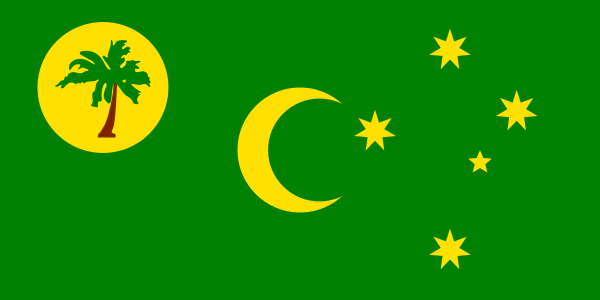
The Cocos (Keeling) Islands, a remote Australian external territory in Oceania, consist of 27 coral islands spanning just 14 km², with West Island serving as the capital and administrative hub. Home to a tiny population of around 593 people, the islands boast stunning lagoons and beaches, relying primarily on tourism, coconut production, and Australian government support for their economy (GDP data unavailable). This tropical paradise, located midway between Australia and Sri Lanka, offers a unique blend of Malay culture and pristine natural beauty.
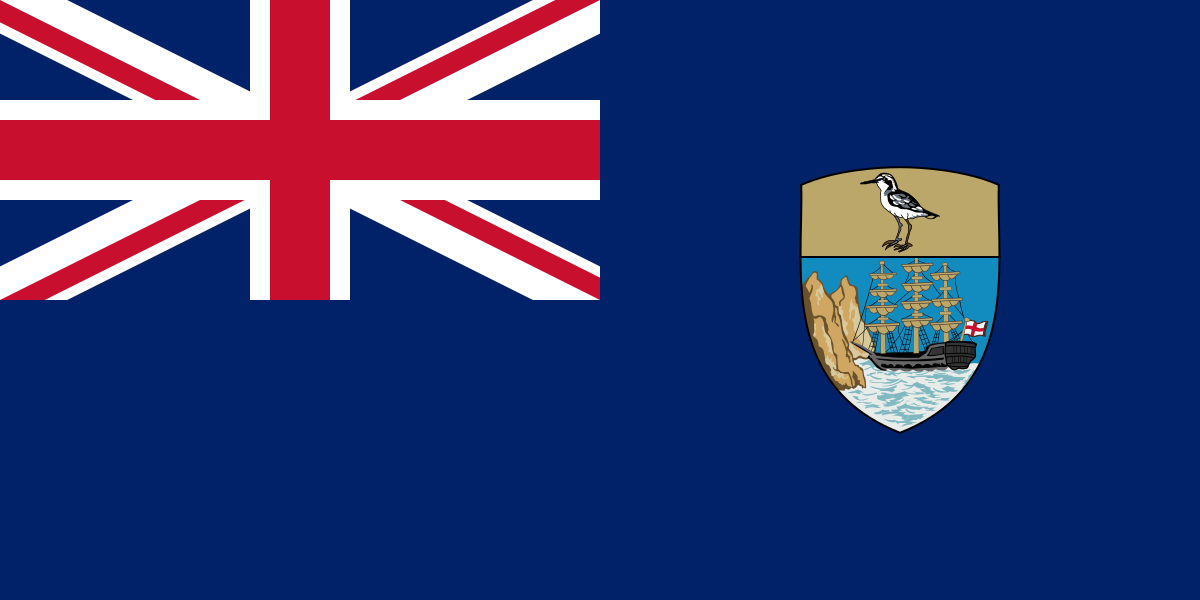
Saint Helena, Ascension and Tristan da Cunha is a remote British Overseas Territory in the South Atlantic Ocean, classified under Africa, with a tiny population of just 5,651 spread across its 394 km² of volcanic islands. Famous for exiling Napoleon Bonaparte on Saint Helena, its capital Jamestown serves as the main hub, while the economy relies on fishing, tourism, and UK aid, though GDP data is unavailable. This isolated archipelago boasts unique biodiversity, including rare seabirds and the world's oldest known animal, Jonathan the tortoise, making it a quirky spot for adventurers.
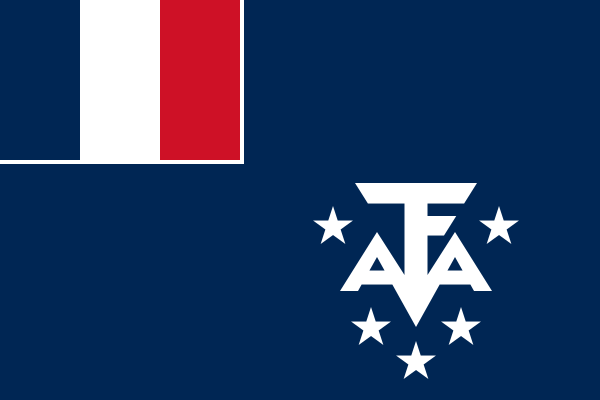
The French Southern and Antarctic Lands (TAAF) is a remote overseas territory of France, comprising scattered islands in the southern Indian Ocean and a vast Antarctic claim, with a total area of 7,747 km² and no permanent population—only about 400 rotating scientists and staff. Its "capital" is the research base at Port-aux-Français on the Kerguelen Islands, serving as an administrative hub for scientific expeditions focused on marine biology, climate research, and wildlife conservation. With no GDP data available due to its uninhabited, non-commercial nature, TAAF stands as a pristine wilderness, home to penguins, seals, and unique ecosystems, but accessible only by ship for extreme adventurers.